What is the Answer Economy?
By Bjorn Vandemeulebroucke · author of Become the Answer
I'm Bjorn Vandemeulebroucke, managing partner of a Word of Mouth Agency and author of Become the Answer. For over twenty years my work has been getting real people to recommend brands. Now that AI does the recommending, I measure and improve how brands show up in its answers.
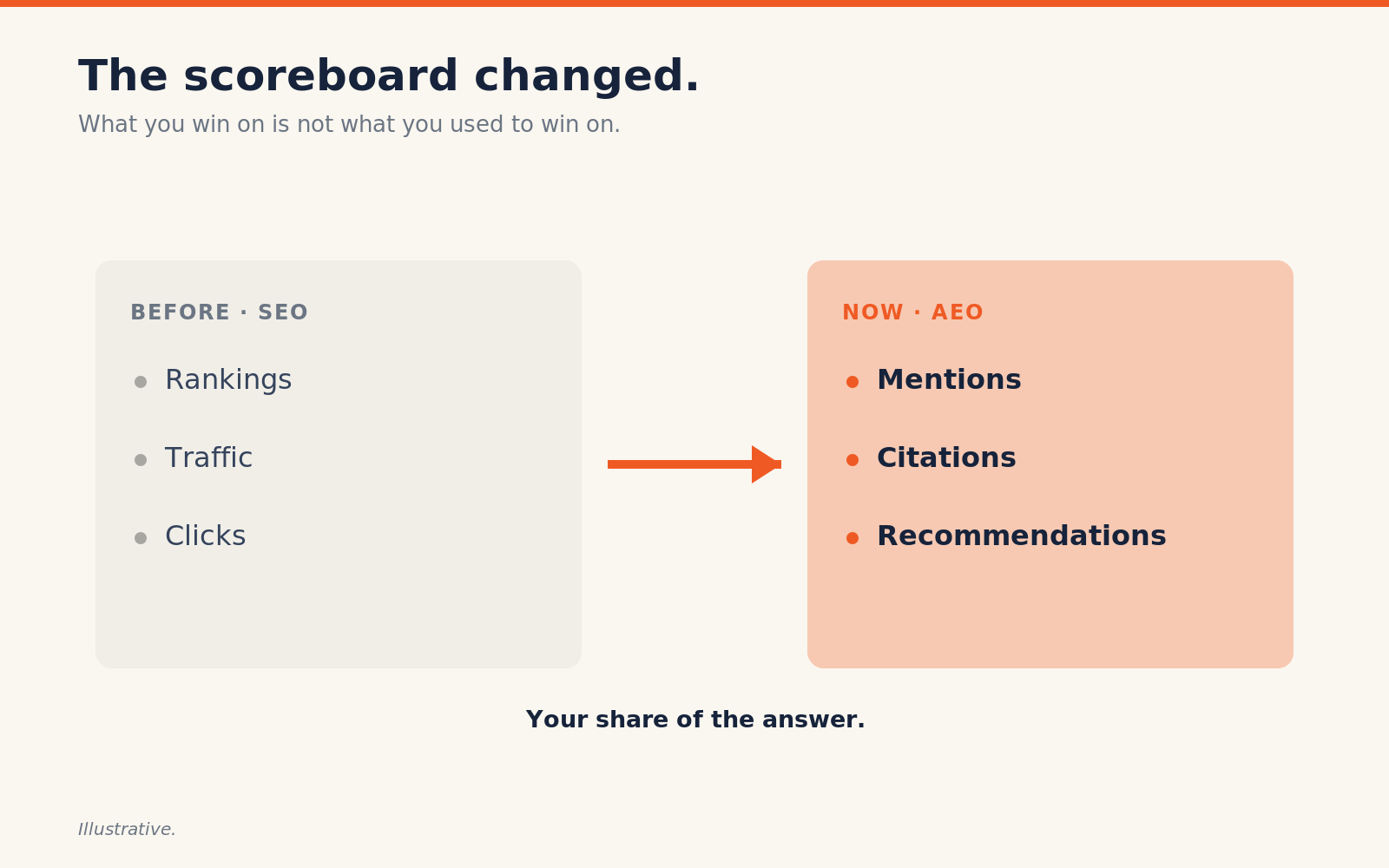
Attention gives way to answers; being cited becomes the currency.
The Answer Economy is the market that replaces the attention economy. For twenty years, the scarce resource marketers fought over was attention: impressions, clicks, reach. Now that a machine gives one answer instead of a page of options, the scarce resource is being that answer. Being cited is the new currency.
In 1971, the economist Herbert Simon described the problem that would define modern marketing: “a wealth of information creates a poverty of attention.” When information is infinite, he argued, the scarce thing is attention, and whatever is scarce is what everyone competes for. He was right for half a century. The attention economy was born, and marketing became the business of buying and winning eyeballs: impressions, clicks, reach, share of voice.
That economy is ending, because the thing it fought over no longer decides the sale.
When a buyer asks an AI what to get, they are not browsing a page of options where your ad might catch their eye. They receive one answer. Attention is not the battlefield anymore, because there is almost nothing to pay attention to, just a recommendation, already made. Winning attention no longer wins the customer, because the customer never sees the field you were competing on.
A new scarce resource takes its place: being the answer. Being named, cited, and recommended by the machine when it speaks. That is the Answer Economy, and it runs on a different currency. Not impressions but citations. Not clicks but mentions. Not reach but recommendations.
The commercial consequence is the part that unsettles people. You could always buy attention. Enough media spend, and you were seen. You cannot buy the answer the same way; the machine does not weigh your budget, it weighs what it can trust. Citations are earned, not bought. Which means the biggest spender no longer automatically wins, and a smaller brand that is genuinely trusted can out-recommend a giant with a bigger media plan.
That is the quiet redistribution underneath the Answer Economy: it rewards being genuinely worth recommending over being loud. The work shifts from renting attention to earning citations, and, eventually, to pricing what those citations are worth, which is a measurement problem of its own.
The attention economy asked: who can I get in front of? The Answer Economy asks a harder question: when the machine answers, is it me it names?
What replaced attention as the scarce resource marketers compete for?
Being the answer. In the Answer Economy the currency is citations, mentions and recommendations from AI, not impressions, clicks or reach, and unlike attention, it can't simply be bought with a bigger media budget.
- Market shift
Related concepts
Want to know where your own brand stands in AI answers?
More from AEO Foundations
The shift
The buyer stopped researching.
Now they just ask.
The decision moves inside a single AI conversation you'll never see.
Has AI changed how people decide what to buy?
The buyer stopped researching a list; they ask, and act on the answer.
- Consumer shift
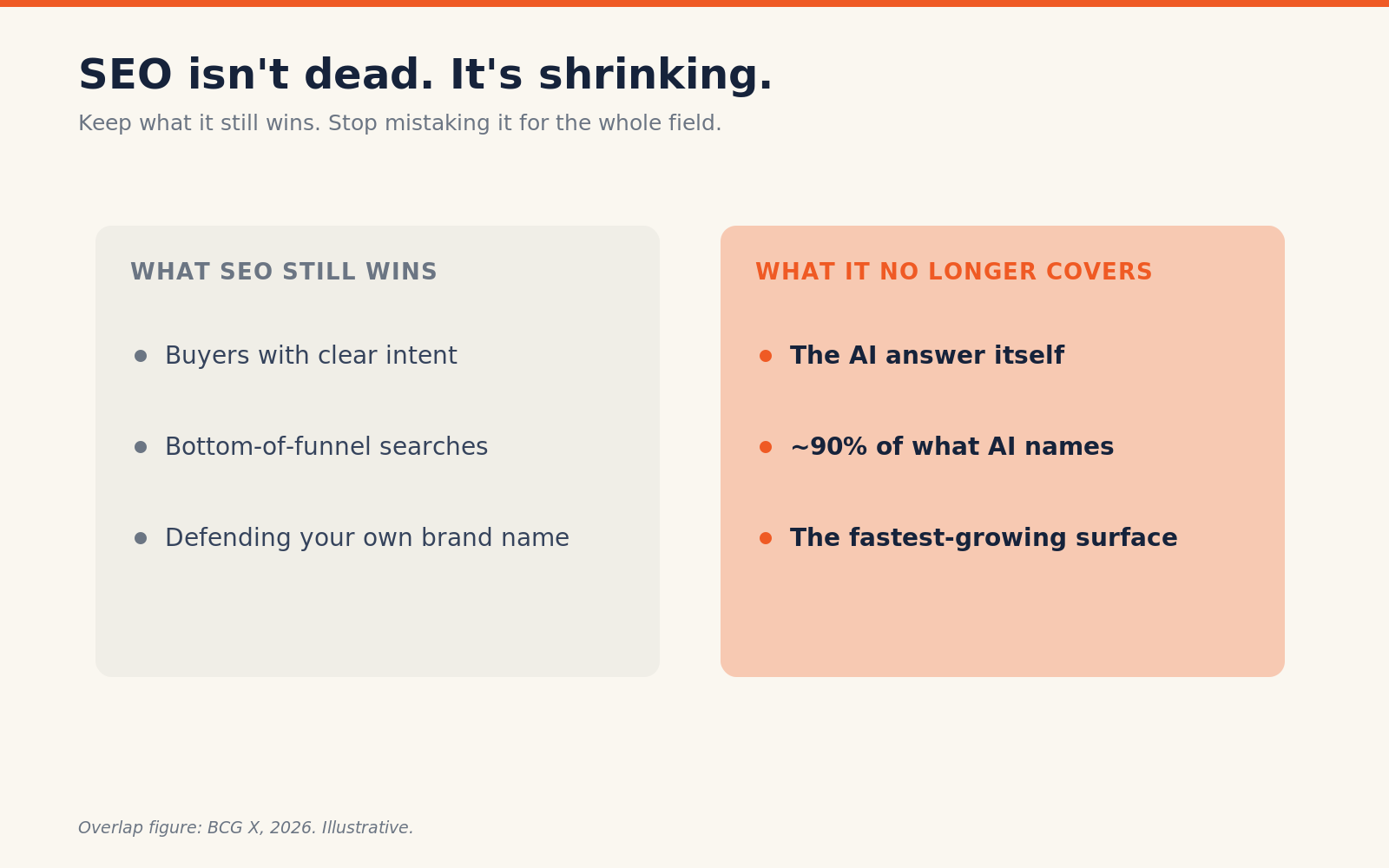
Is SEO dead, or just shrinking?
The honest answer: search isn't dead, but AI answers and search overlap by only 8 to 12% (BCG X).
- System shift
The funnel
The funnel didn't disappear.
It collapsed into one moment.
And most of that moment is dark to your analytics.
What happened to the marketing funnel in the age of AI?
The journey collapses into one recommendation moment.
- Consumer shift